Skip to content

<span id="hs_cos_wrapper_name" class="hs_cos_wrapper hs_cos_wrapper_meta_field hs_cos_wrapper_type_text" style="" data-hs-cos-general-type="meta_field" data-hs-cos-type="text" >Self Care Isn’t Selfish</span>

Self Care Isn’t Selfish

Susanne Skinner, Marc Crosier, Dia Stokes Kelly


Self-care is one of the most commoditized and overused phrases in the self-help industry.    The market is saturated with articles and practices for restoring yourself when life is out of balance. 

During the Covid-19 pandemic it was so widely marketed it became a trend focusing on consumerism and superficial practices, never addressing the idea of genuine well-being.

What is Self-Care?

The Oxford dictionary defines self-care as the practice of taking action to preserve or improve one’s health.  This is much more than a passing trend – it’s a lifestyle that emphasizes holistic health, mindful decision making and prioritizing your mental well being

In 2025 let’s replace self-care with self-nurturing, resolving to care for ourselves emotionally, mentally, and physically.

Self-Care Sabotage

The event industry is more than a job, it is a passion.  It isn’t a nine-to-five gig, and it doesn’t willingly promote work-life balance.  In fact, to those of us growing up in this industry, it is a foreign concept.  Long hours, nights and weekends and missed holidays are reality.

Good intentions are easy to create and even easier to lose.  The world of event management does not consider the personal side of your life.  If we aren’t careful, we run the risk of never taking the comp time we’re owed, letting our days run together until we are exhausted and find ourselves running on empty.  We make excuses for the things we miss.

The most common excuses for this flawed thinking are found in the world we work in:

  • This is our busy season
  • I am a team of one
  • There is never a good time for comp time
  • My company doesn’t give comp days
  • I’m afraid to take time off that isn’t PTO

If you are self-employed, part-time or retired and volunteering, this applies to you as well.  You are the Boss and CEO of your time.

Seven Pillars of Self-Care

The seven pillars include:  mental, emotional, physical, environmental, spiritual, recreational, and social well-being.   A well-balanced and nurturing routine involves each of these but since we’re overworked humans it’s easy to focus on one or two pillars and let the others slide.

There is no perfect balance.

Look at the categories and decide where you need to focus your energy.  Sometimes one or two areas demand greater attention because they can and will impact the others.

If it feels overwhelming, choose one area each day or week, making it easier to see and feel your progress.  Reward yourself by creating new patterns of behavior that bring stability and equilibrium to yourself and your life.

You are your best advocate for change.
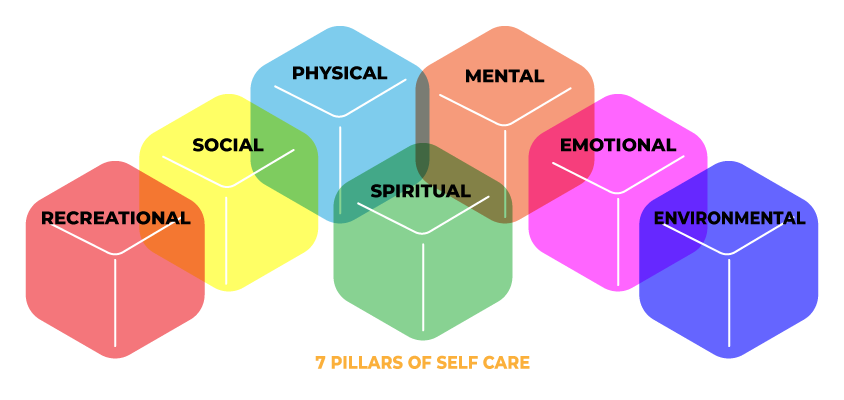
seven-pillars


Self-Nurturing Best Practices

The Exhibitor Advocate Team curated this list of suggestions and best practices to promote a self-nurturing mind set.  These little things are really the big things!  Find what matters most and prioritize it.

Health

  • Exercise: Go outside, take a brisk walk, ride your bike, practice yoga, swim go to the gym, stretch at night
  • Schedule downtime in your calendar.
  • Eat a balanced diet
  • Stay hydrated.
  • Practice good hygiene.
  • Remember to breathe.
  • Shop locally for healthy food and snacks when you arrive
  • Develop regular sleep habits.
  • Wear comfortable shoes.


Mental and Emotional Well-Being

  • Give yourself quiet time.
  • No meetings during lunch hour – block your calendar
  • Be selective about reading the news.
  • Pack photos of family, friends, and pets – you are not alone.
  • Give yourself something to look forward to.
  • No is a complete sentence.
  • Find your tribe or community for support.


Work-Life Balance

  • Put the oxygen mask on yourself before helping others.
  • Give yourself a curfew – pick a time to stop work and do it.
  • Step away from your desk on a regular basis
  • Take your lunch break and come back refreshed
  • Ask for help
  • Phone home

Social and Recreational

  • Spend time with family and friends.
  • Engage with your pet.
  • Book yourself a massage
  • Don’t drink alcohol just because it’s free.

Put yourself first – no one else is going to do it for you!

The Exhibitor Advocate community invites you to share your best practices and self-care tips for a follow-on blog.

Give Yourself Grace

Giving yourself grace means showing up for yourself.   Self-nurturing is the practice and responsibility of putting yourself first to positively impact your physical and mental health.

When it comes to your work schedule here are two best practices to stay focused:

  • Look back and then look ahead.  Using this data, create a productive conversation with your manager to reassign and prioritize your workload.
  • Review the year and the parts of your job that bring satisfaction and enjoyment. This is a beneficial conversation during performance reviews or one on one meetings.

Give yourself grace.  Nurturing yourself helps manage stress, lowers your risk of illness, and increases energy levels by promoting healing and restoration of mind, body and spirit. 

We’re all in this together!